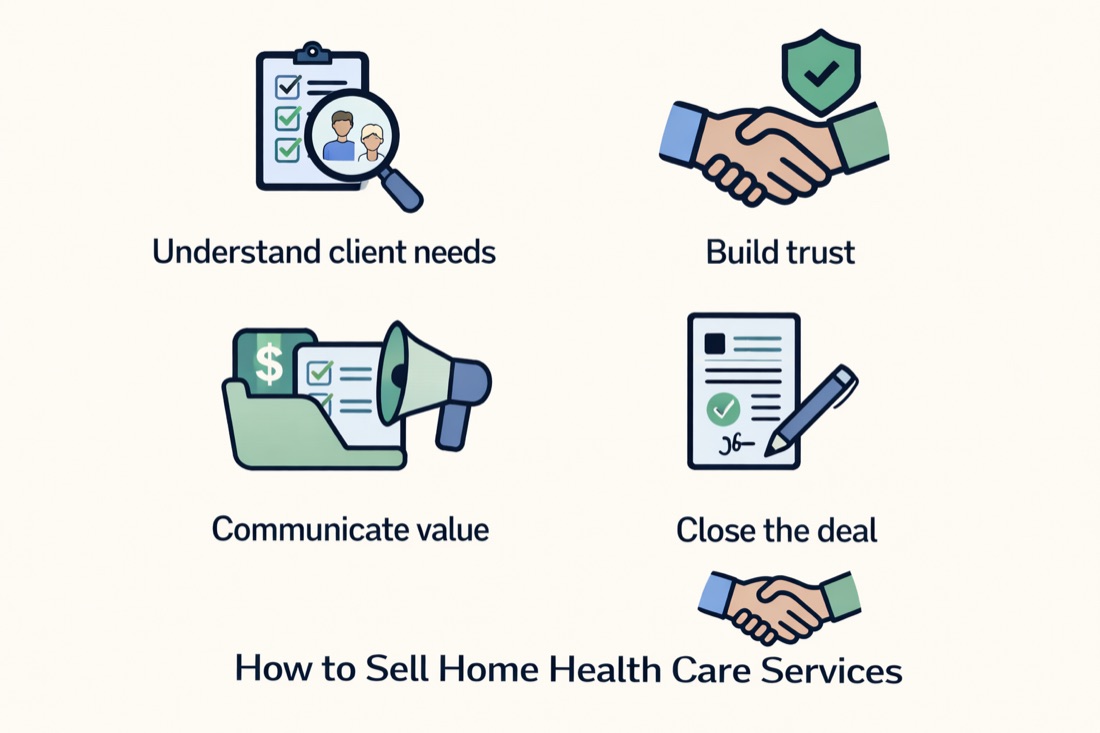
Running a home care agency takes more than compassionate caregivers and quality services. It requires the ability to connect with families, build trust, and communicate your agency’s value clearly. Selling home health care services isn’t about aggressive marketing; it’s about demonstrating credibility, professionalism, and a genuine commitment to helping people live safely and comfortably at home.
This guide explains how to sell home health care services effectively while staying compliant with state regulations, including those set by the Texas Health and Human Services Commission (HHSC). It also shows how a home care consultant can help agencies develop ethical marketing strategies that drive growth and maintain trust.
 Key takeaways
- Summary
- Understanding How Home Care Sales Differ from Traditional Services
- Identify Your Ideal Client and Market Needs
Summary
This blog provides a step-by-step approach for home care agency owners who want to attract more clients, strengthen referral relationships, and grow responsibly. It explains how to identify the right audience, build credibility, and create compliant marketing strategies that align with HHSC standards.
The article emphasizes that selling home health care services is about education and trust, not traditional sales tactics. By building relationships, demonstrating expertise, and maintaining compliance, agencies can achieve sustainable growth. The post concludes by noting that 123 Consulting Solutions is a trusted home care consultant in Texas, helping agencies establish ethical and effective sales systems statewide.
Table of Contents
- Introduction
- Understanding How Home Care Sales Differ from Traditional Services
- Identify Your Ideal Client and Market Needs
- Build a Professional and Trustworthy Brand
- Develop an Ethical Sales Strategy
- Build Referral Networks and Partnerships
- Use Digital Marketing the Right Way
- Showcase Compliance and Credibility
- Track and Improve Your Marketing Efforts
- Common Mistakes to Avoid
- Conclusion
- Frequently Asked Questions
Understanding How Home Care Sales Differ from Traditional Services
Selling home health care services is not the same as selling a product. Families who reach out to home care agencies are often seeking help during emotional or uncertain times. They are looking for reliability, compassion, and professionalism, not flashy advertising or unrealistic promises.
This means your sales approach must focus on listening, educating, and building confidence. Success depends on your ability to clearly explain what your agency does, how it meets HHSC standards, and why families can trust you to care for their loved ones.
Identify Your Ideal Client and Market Needs
Every agency should understand its target audience before developing a sales strategy. Start by identifying the people and organizations most likely to need your services.
In Texas, these often include:
- Seniors needing assistance with daily activities.
- Individuals recovering from illness or surgery.
- Families seeking respite care for aging parents.
- Hospitals and rehabilitation centers looking for reliable post-discharge care partners.
Once you know your audience, tailor your communication to their needs. Speak to their challenges, such as safety at home, peace of mind, and dependable caregivers. Avoid overly technical language and focus on how your agency can make their lives easier.
Build a Professional and Trustworthy Brand
Families choose agencies they trust. A strong brand creates that trust before the first phone call.
Your website, brochures, and business listings should consistently present your agency as professional, compliant, and compassionate. Include your HHSC license number, a clear description of services, and testimonials from satisfied clients. Avoid exaggerated claims and focus on transparency.
Ensure your online presence matches your professionalism offline. A clean website design, accurate contact details, and verified listings on Google Business Profile, Yelp, and other platforms build credibility and improve visibility.
Develop an Ethical Sales Strategy
Marketing in the home care industry must always remain ethical and compliant with HHSC standards. Families rely on your honesty, so your message should be educational rather than promotional.
Here are key principles of ethical selling:
- Educate first: Offer helpful information about care options, eligibility, and what home care really involves.
- Be transparent: Always disclose pricing, staff qualifications, and licensing details.
- Avoid incentives: Never offer payments or gifts in exchange for client referrals.
- Stay compliant: Review HHSC rules regularly to ensure your materials meet advertising regulations.
A strong sales strategy focuses on relationship-building, not transactions. The goal is to become a trusted partner in care, not just a service provider.
Build Referral Networks and Partnerships
Referrals remain one of the most effective ways to grow a home care agency. Building partnerships with healthcare professionals and community organizations helps create a consistent stream of new clients.
In Texas, key referral partners often include physicians, hospital discharge planners, social workers, and senior centers. Introduce your agency to them through professional presentations or informational materials that explain your services and highlight your HHSC compliance.
Stay connected by following up after each interaction. Thank them for referrals, provide updates when appropriate, and continue to nurture relationships over time. Consistency and professionalism lead to trust, and trust leads to referrals.
Use Digital Marketing the Right Way
Digital marketing is an essential part of modern home care sales, but it must be done responsibly. Many families begin their search for care online, so having a well-optimized digital presence ensures they find your agency easily.
A few effective digital strategies include:
- Search Engine Optimization (SEO): Use keywords such as "home care in Texas" or "non-medical home care services" in your website content. Make sure your Google Business Profile is complete with reviews and photos.
- Educational Content: Publish helpful blogs on topics like “Choosing a Home Care Provider” or “How HHSC Licensing Protects Families”. This builds authority and helps clients make informed decisions.
- Social Media Presence: Use Facebook and LinkedIn to share caregiver stories, compliance tips, and client testimonials. Keep your tone professional and positive.
- Email Outreach: Create a simple email newsletter that offers advice and updates rather than direct sales pitches.
By focusing on education, your agency builds long-term credibility that naturally converts readers into clients.
Showcase Compliance and Credibility
Families want assurance that the agency they choose is legitimate and trustworthy. Clearly communicating your compliance and professionalism can make a significant difference in winning their trust.
Display your HHSC license certificate on your website and in your office. Include administrator training credentials and any special certifications your caregivers hold. If you have a track record of successful surveys or audits, mention that as well.
Transparency demonstrates that your agency meets strict state standards, which reassures families that they’re choosing a safe and compliant provider.
Track and Improve Your Marketing Efforts
Once you begin implementing your marketing strategy, track your results to see what works best. Monitor how clients find your agency through referrals, online searches, or events.
Keep a record of inquiries, conversion rates, and client satisfaction scores. Reviewing this data every few months helps identify which methods bring the highest-quality leads and where improvements are needed.
Even small adjustments such as updating website content, improving follow-up calls, or refining staff introductions can significantly increase conversions over time.
Common Mistakes to Avoid
Even with the best intentions, some agencies make mistakes that limit their growth potential. Avoid these common issues:
- Overpromising results: Never guarantee specific medical outcomes or unrealistic turnaround times.
- Ignoring compliance in marketing: Every statement should align with HHSC guidelines.
- Neglecting follow-up: Many potential clients never convert simply because no one called them back.
- Relying on one marketing channel: Balance digital outreach with personal relationships and community engagement.
Learning from these mistakes strengthens your credibility and keeps your operations compliant.
Conclusion
Selling home health care services is not just about marketing, it’s more about building lasting relationships based on trust, care, and compliance. Families choose agencies that listen, communicate clearly, and demonstrate professionalism at every step.
A thoughtful approach to outreach, supported by ethical practices and clear communication, allows agencies to grow steadily and confidently.
123 Consulting Solutions is a trusted home care consultant in Texas, helping agencies establish compliant sales systems, build referral networks, and implement HHSC-approved strategies for sustainable growth.
Frequently Asked Questions
Q1. How can I advertise my home care services without violating HHSC rules?
Focus on education and transparency. Provide accurate details about your license, services, and experience rather than using promotional or exaggerated claims.
Q2. What’s the best way to get referrals from hospitals and physicians?
Build professional relationships by introducing your agency, explaining your services, and maintaining consistent follow-ups. Always stay compliant with state referral laws.
Q3. Should I use online ads for home care marketing?
Yes, but carefully. Use informative ad copy, avoid medical guarantees, and direct families to educational resources on your website.
Q4. Can I hire someone to handle my home care marketing?
Yes. Many agencies work with marketing consultants or compliance experts to ensure all materials meet HHSC standards.
Q5. How can a home care consultant help with sales?
A home care consultant can create compliant marketing materials, train staff on communication best practices, and help you develop long-term referral strategies.
About the author
Segun Ogungbemi
Principal Healthcare Operations Consultant
Segun Ogungbemi is a seasoned healthcare administrator and regulatory consultant with deep expertise in state licensing surveys, Medicaid provider agreements, clinical QA, and scalable agency management systems.
View author profile
